A new spring threatens
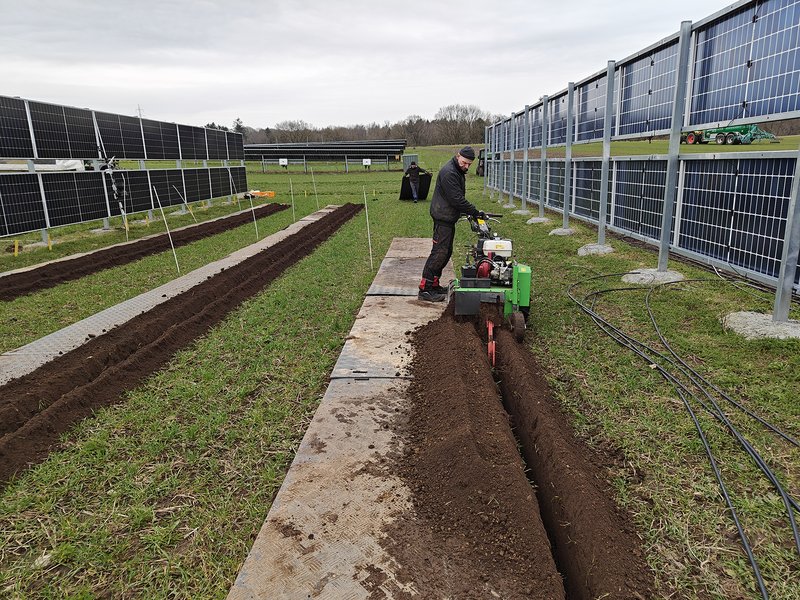
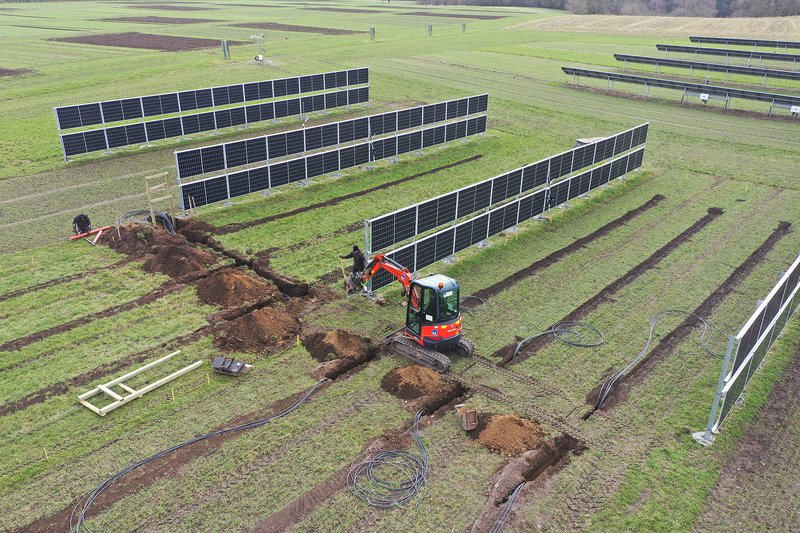
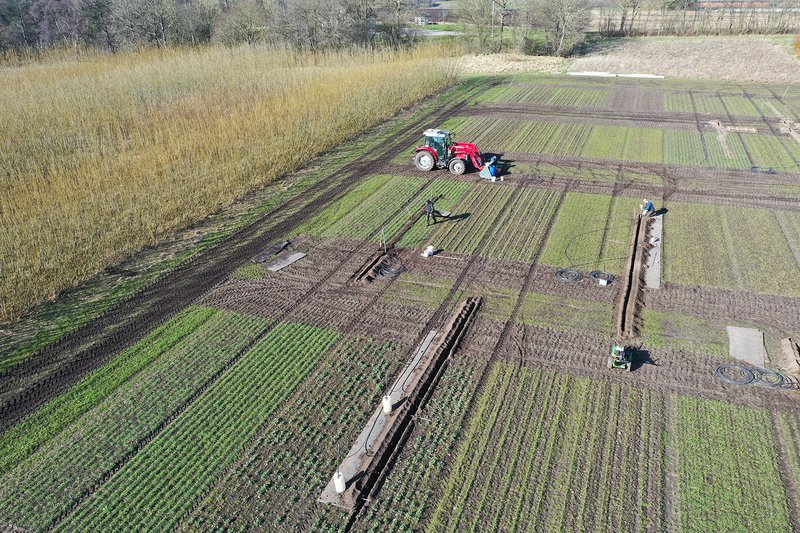
Last year, spring work in the fields dragged on because of a lot of water in the soil. It is the same this year. We have many trials where new suction cells and TDR equipment must be installed (TDR is equipment for measuring soil moisture). We had hoped to have begun this as early as January/February, but first the ground was frozen, and then the soil was too wet, so it was not until March that we got started. That means that there is a strain on all the “normal” spring work!
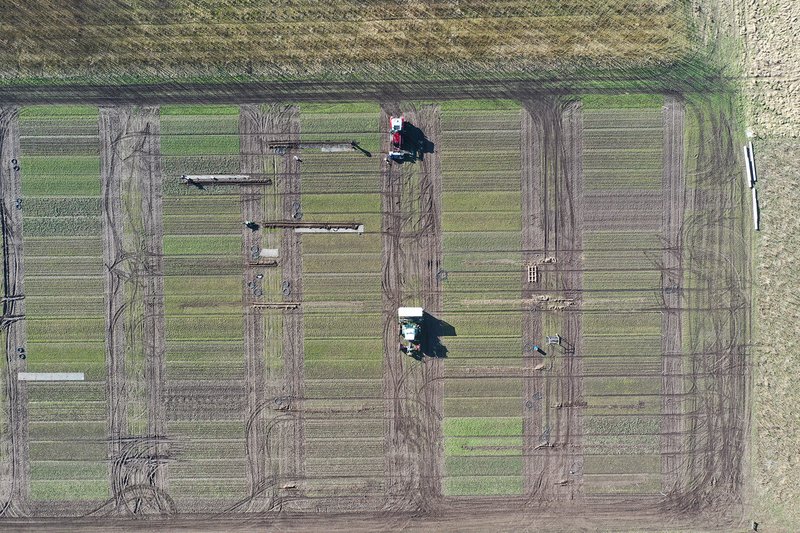
And what will happen at Foulumgård in 2024?
As always, we have a mix of old and new trials. Our “platforms” with more or less fixed crop rotations go on. In these, there is a mix of main trials plus smaller trials “on top” of the main trial.
The number of projects focusing on greenhouse gasses such as nitrous oxide and methane is still growing. Here at Foulum we do this in a close collaboration with laboratory technicians and environmental technicians, and often many people are involved in the individual trials. This means that our time windows often are very small, and this means some extra challenges when not only the weather has to be considered when we plan tillage, manure application, sowing etc. This sometimes results in long working days and a bit of work in weekends.
During 2024 a couple of large projects will begin at Foulumgård. One is a new project with biochar, which the Danish Agricultural Agency has asked AU and the University of Copenhagen (UCPH) to initiate. This trial will also be located at Askov and Jyndevad and at Højbakkegård at UCPH.
The idea is to test the impact of different types of biochar on soil and plants, combined with different application strategies (how often should biochar be applied?).
The other one is a project where we will measure greenhouse gases in a larger area (hectare level) than the plots we normally measure, and with more advanced measuring equipment.
And hopefully we will get a lot of new students at Foulum in September, and in connection with that, the plan is to create a small “Student Farm” with various crops that can be used in teaching. We have become involved in this task, and we are looking forward to getting started this spring. This will take place in the area around the burial mound, which is centrally located next to the main buildings at Foulum.
In addition, we continue our trials on catch crops/fallow crops, organic/conventional crop rotations, optimised biomass production for biorefining, optimisation of crops for protein extraction, reduced tillage/Conservation Agriculture, testing of various organic fertilisers such as “residual products” from extraction processes, decantation fluids from manure separation, etc., production of “legumes” for human consumption, flower strips (the same trial is located at Flakkebjerg), organic cattle rotation, observation varieties (cereals) for Tystofte and PLAP/The pesticide warning areas in Silstrup and Tylstrup.
We are getting more tasks, and therefore we also need more employees. We have hired Dennis Fogsgaard Jensen as a new man in the field, and we have hired Paw Ebbesen as a new technician regarding electronics/instruments. At the moment, we also have a job advertisement for a technician. In addition, Maja Hørning Skjødt is moving from the soil group to Foulumgård.
Our climate chambers in the semifield have been given a much-needed update with, among other things, a new and larger refrigeration compressor. In addition, the software for the control has been updated. The next step is an update of our greenhouses in the semifield.
Last year, we got a new soil sampler. This has solved some of our challenges, but we still need a solution for when we need to take large (diameter) and deep samples (more than one metre).
At Foulumgård we can feel that we get many new colleagues who do not know what goes on at Foulumgård and who in some cases are not used to doing field trials.
This requires that we help each other getting the process started regarding new trials. This year, we have tried to introduce a “Field Trial Protocol”, which is an Excel spreadsheet in which we ask for basic information from the very basic things such as project name and number, who are the people involved in the project (including their contact details) to how big is the project (size of plots, number of plots), crops, treatments, etc.
Our experience so far is that it works well; if nothing else, it means that we get the dialogue going about the project.
In 2023, we had a few projects that were implemented without an actual trial plan being made. This is a problem, both for us and for the person in charge of the project.
We had decided that in 2024 we would not start a project until we had a trial plan. We can already see that this is going to be difficult!
But we can also see that the “Field Trial Protocol” is helping us. Now at least we know who to contact!
We believe that we can improve on this in the future, both for ourselves and for our “customers”.
We try to keep our overview of links to websites for our trials updated on Foulumgårds website: https://agro.au.dk/profil/faciliteter/foulum
NB: Engelsksproget side: agro.au.dk/en/about-the-department/facilities/foulum
So, with a mix of “old” and new trials, we look forward to another challenging and exciting growing season at Foulumgård