Funding

AGRO - Funding
The Project & Funding team supports researchers at the Department of Agroecology throughout the entire project lifecycle. The team consists of four members, two of whom focus on pre-award activities, including advising on national and international funding opportunities, project development, and application support. The remaining two specialize in post-award tasks, handling administrative project management for strategically important projects.
The team conducts internal courses and workshops on project management and funding, collaborates with TECH RS on funding strategy, and assists the institute in industry partnerships. They report to the Head of Secretariat and carry out tasks for the institute, secretariat, and section management.
📝 We support
📝 We support


-
Clarification of guidelines for national funding programs
-
Responding to budget-related questions for national funding applications
-
Organizing support processes for selected funding schemes
Yearly plan for Project & Funding
Yearly plan for Project & Funding
The annual cycle highlights the key processes and deadlines for Funding opportunities.
Disclaimer: The annual wheel includes only the most commonly applied-for funding calls. If you are exploring other funding opportunities, please speak with the Funding Team and the Head of Department before developing your proposal.
Note whether the individual item is supported by the Research Support Office (RSO) or the AGRO Funding Team.
👆Click on the different titles to read details.
➡️ Use arrows in the top left to go back and forth in time.
Funding support available for AGRO researchers
Funding support available for AGRO researchers
By the AGRO Funding Team
Finding and securing research funding can be challenging - but you don’t have to do it alone. As a researcher at AGRO, you have access to support for identifying opportunities and preparing applications. This article gives you a brief overview of the support functions available at different levels within AU.
The funding support for AGRO’s researchers is organised in three different units – The Central Research Support Office (RSO) at AU level who supports all AU Faculties, the TECH Research Support (TECH RS) at the Dean’s office, and us, your local Project and Funding Team at AGRO.
Our units cover different areas but collaborate closely to give you the best possible support.
The Central Research Support Office (RSO) Proposal Development team offers consultancy services on selected grant sources throughout the proposal writing process. This team is organised into smaller teams dedicated to specific funders or call types. The international team supports Horizon Europe applications, including ERC, MSCA, Clusters, Missions, Partnerships, and EIC, while the national team focuses on calls from Innovation Fund Denmark, the Danish National Research Foundation, and most DANIDA calls. This structure allows for specialised support tailored to different funding schemes. You can find the contact email per team level on the homepage.
AGRO’s contact person at RSO is Anne Birgitte Lindgren, who visits AU Viborg on the last Thursday of each month (holidays excluded). In addition, Anne Birgitte is part of the Horizon Europe Collaborate & WIDERA, and the EIC teams, and you are welcome to book a meeting with her for EU-related questions or reach out via email.
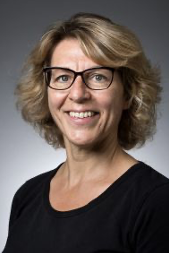
The TECH Research Support (TECH RS), at the Dean’s office consisting of Karin Lykke and Torben Juul Classen, maintain direct contact with funding bodies and coordinates across departments by organising workshops and dissemination events. Their focus is strategic support for all TECH departments, ensuring alignment between AU and external stakeholders/funding bodies.
Finally, the Project and Funding Team at AGRO, consisting of Isabella Leong and Anne Krog Ingerslev supports researchers across all AGRO locations in Viborg, Aarhus, and Flakkebjerg. We are the ones answering your emails at funding@agro.au.dk, and you are always welcome to drop by our offices – check our calendars, they are always up to date. We also visit Flakkebjerg once per month together with the communication team, and we also visit Aarhus once per month.
The AGRO funding team give support for all the AGRO relevant calls that RSO or TECH RS does not support. These include:
- The Green Development and demonstration programme (GUDP)
- Organic Research and Development and Demonstration programme (ORGRDD)
- The Independent Research Fund (DFF)
- Private foundations like the Novo Nordisk Foundation (NNF) and The Villum Foundation.
Our role is broad and covers everything from advising on eligibility and clarifying call guidelines with funding bodies, clarifying internal budget guidelines to brainstorming ideas, identifying relevant funders, and finding project partners. We also organise information meetings and materials, and we review proposals to help strengthen applications. Beyond these visible tasks, we contribute to strategic development at AGRO and TECH level, provide input to management, and participate in initiatives that improve research support across AU.
From Autumn 2025 onwards the AGRO funding strategy is focused on supporting a healthy economy in the department. This means that we will be focusing our support and attention on calls that provide sufficient coverage and allows funding for tenured scientific staff.
Where do you find the information?
The AGRO Funding team homepage funding wheel is our primary communication platform about AGRO-relevant calls. Here, you can get an overview of the annual funding cycle for AGRO-relevant calls with deadlines and key points about purpose, target group, and budget frames for each call. In addition, selected upcoming calls and events are announced in BiWeekly.
Both RSO and TECH RS offer support processes and webinars you can sign up for; they are open to all researchers. Events organised by RSO will be announced via the RSO homepage or the RSO newsletter, which you are welcome to sign up for here. The TECH RS events are communicated to the AGRO funding team and shared via the AGRO funding wheel on our Funding team homepage.
Most importantly, there is no wrong entry point for funding support. Whether you contact the AGRO Funding Team, TECH RS, or RSO, we will make sure you get the help you need. If you have an idea for a project or questions about funding opportunities, do not hesitate to get in touch – we are here to help.
*******************************************************************
Isabella Leong and Anne Krog Ingerslev