Sustainable digital-based farming
Sustainable digital-based farming is one of our eight focus areas at the Department of Agroecology. In the Brundtland Report from 1987, sustainability was defined as social, economic and environmental aspects, and at the Department of Agroecology we work with all three aspects also within the digital area.
Today, we use many different sensors which are placed on machines, ATVs, drones, stationary systems and satellites, and we make both single and repeated measurements on soil, plants and crops. At the same time, we take plant, crop and/or soil samples, which we analyse for different chemical and physical constituents in order to find correlations between these analysis results and sensor measurements. We use these correlations to develop models which we use later together with new sensor measurements at other locations and/or other times to better understand the development of the plants, the crops and/or the soil over time as a function of plant and crop growth or as an effect of a treatment. The technology and the digitisation therefore give us a better biological understanding of the system. It is just in the interaction between digitisation and biology that we at the Department of Agroecology have a strong position within our research and teaching, as we have built digitisation on top of our extensive biological knowledge.
The weather presents challenges when digitisation is to be implemented in our field trials and in farming and when the economic and environmental potential is to be quantified. The weather is perhaps precisely the reason why we have not yet seen major economic or environmental benefits from digital-based farming. However, I am convinced that digitisation is one of the methods to maintain Danish agricultural production and ensure a green transition.
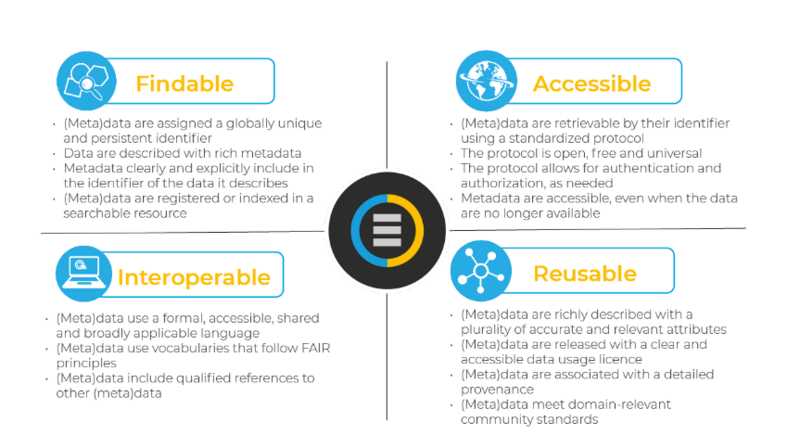
Research into digitisation in farming is very fractional with projects within for example soil mapping, weed control and nutrients. If we are to achieve the major digitisation gain, we need to work more on synergies and look at digitisation in a holistic perspective which we know and work with in the complex biological system. Here, artificial intelligence plays a large and important role, even though we do not work in a static but in a dynamic biological system. In our projects we use various methods within artificial intelligence with great success. Perhaps the greatest challenge within both agriculture and our department is the handling of our data. Our fine and advanced algorithms can handle large amounts of data, but these data must be findable, accessible, interoperable and reusable. In English we speak of FAIR data management. Both at the department and in the agricultural sector, we are working at full stretch to ensure that this happens, and this will open up for a new but complex research area where data can become available at field level, and where we will probably see far more ‘on farm experiments’. Translating these complex data into biological knowledge will be an exciting challenge, and it will definitely require increased collaboration with other departments to fully cover the social, economic and environmental aspects of digitisation.