We contribute important knowledge to the public
AGRO’s research contributes important knowledge to national and global objectives, including protection of the Danish aquatic environment and fulfilment of the UN’s sustainable development goals.
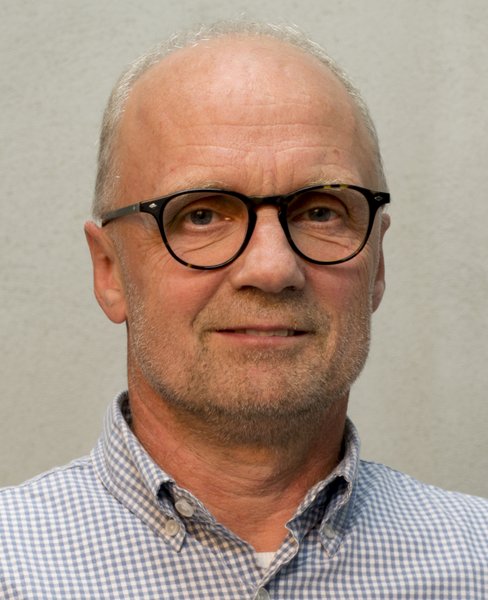
Many of us have now returned from the summer holidays, hopefully with charged batteries. The renewed energy should get us ready to pick up the thread from before the holidays and to tackle new and exciting challenges.
In AGRO we pursue the same overall objectives, namely AGRO’s strategy. The strategy has an eye for the big picture; that is so say national and global objectives.
On the domestic level, the water management plans and agricultural package still occupy quite a bit of our time. We play a large role in contributing to the scientific basis for these national measures and for future legislation and regulation in this area. Our role is not without challenges. At the back of our minds we have Danish Agriculture and Food’s campaign with claims of so-called seven sins, together with the intense debate about the NLES model and the international evaluation of the models behind the water management plans.
The aquatic environment belongs to us all
From a broad perspective, the goal is to protect our common aquatic environment. Different opinions, varying points of view and various research foci may confuse the public’s understanding. It is very important that we ourselves keep track of the relationships and interactions between what happens on land and what happens in the aquatic environment. A major portion of the research regarding the aquatic environment is carried out in the Department of Environmental Science and the Department of Bioscience. In the AGRO management team we therefore think that we ought to intensify our interdisciplinary collaboration with ENVS and BIOS in order to achieve a greater understanding. This autumn we will take the initiative to set this in motion.
One of the instances in which we work across disciplines to protect the aquatic environment is in connection with the preparatory work for the third period of the water management plan (2021-2027). The Danish Environmental Protection Agency has appointed a specialist reference group, which has a series of meetings on selected concrete specialist projects that are to be initiated towards the preparation of the basic analysis and measures connected with the water management plan. I participate in the group’s meetings, which means that we in AGRO have the possibility of submitting input.
Knowledge makes a difference to the world
At the global level AGRO’s research may contribute knowledge to solving several of the UN’s 17 sustainable development goals, mainly concerning food, water, climate and land use, but also in other areas. As a department our research areas are a natural fit to the sustainable development goals.
Before the summer holidays, the dean of ST usually gives each member of the faculty management team an edifying book to read during the summer. This year it was ”Bæredygtig global udvikling – FN’s 17 verdensmål i et dansk perspektiv” (Sustainable global development – UN’s 17 sustainable development goals in a Danish perspective) edited by Steen Hildebrandt. The book discusses why the global goals are important in Denmark and raises questions such as: ‘What do the goals mean for Denmark?’ and ‘Which measures must we take in Denmark?’.
The authors of the book are 35 of Denmark’s leading experts in the various areas dealt with in the global goals. I am pleased that Section Manager and Professor Jørgen E. Olesen, KLIMA, and Senior Scientist John Hermansen, SYSTEM, have contributed a chapter to the book. They have written about ”Fødevarer til mennesker med respekt for naturen” (Food for people with respect for nature). It is interesting to read how these goals are put into a Danish perspective. Torsten Rødel Berg and Jørgen E. Olesen have both previously written about the subject in Biweekly in AGRO and the UN target the same goals and UN’s Sustainable Development Goals – what do they mean for us?, respectively. In the coming year we will focus further on this subject.
Our challenged finances
Getting AGRO’s finances sorted out is still a major challenge. The reason for the deficits in the 2017 and 2018 budgets is that we received exceptionally many consultancy tasks from the Ministry of Environment and Food. The same applies in 2018, so if we are to avoid problems in the next budget, we need to manage this better.
It has been a problem that we did not know how much money was tied up in co-financing of externally financed projects. We have lacked the management tools needed to make a precise prioritisation and allocation of our resources. In a collaboration with Finance this is now falling into place. This year we will plan our activities as early as September. Project descriptions for 2019 will have to be made before the end of November so that we can be abreast of the development of the activities. In the coming period you will hear more. There will be department meetings in September, in Flakkebjerg and Foulum. There will be a summary meeting in English also.
The group development dialogues went well
I am glad that I participated in the group development dialogues (GDD) in the sections. I think that they went well. My participation has given me a better idea of what is going on in the sections.
It appears that things are generally going well in AGRO and that the atmosphere is good. There are many well-functioning groups of juniorVIP. I would like this potential to be exploited more, for instance in connection with the work with the UN’s 17 sustainable development goals. This is one of the tasks we need to address in the autumn.
The staff development dialogues will be carried out in the sections in the early autumn.
We must protect the farmer’s data
As part of our research we collect data about individual fields and other things from the open country by means of for instance soil samples, drones or satellites. We have to protect these data for the sake of the individual farmer according to the EU’s new General Data Protection Regulation (GDPR). I find that this is positive for the sake of the farmer, but we need to find a practical approach.
We are of course not the only ones facing this challenge; therefore, I think that we may profit from each other’s knowledge and experience. Data are allowed to be publicly available if the farmer has expressly permitted this. Therefore, we must prepare some procedures and standard contracts or standard agreements. In the autumn, we will contact Seges and others to see if we can work something out together.
Welcome back to work after the summer holidays – a lot of exciting tasks are waiting!