AGRO fares better than average
Public sector employees are twice as often absent due to sickness as employees in private enterprises – but not in AGRO.
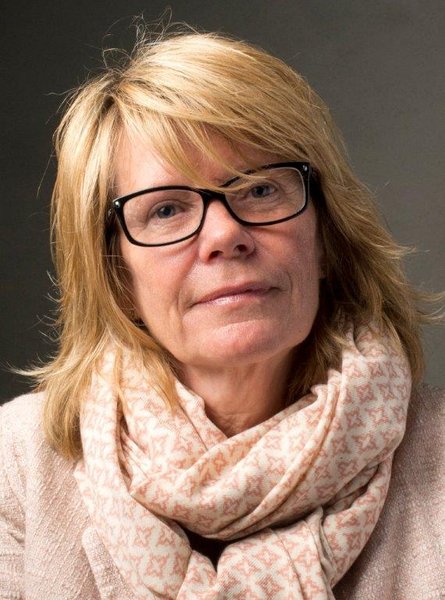
”Sorry, boss, I’m not coming to work today." That was the message in 2017 from nearly twice as many public sector employees as from employees in private enterprises.
The many headlines in the daily press concerning the absence of public sector employees as opposed to employees in private enterprises due to sickness provoke me. This is not what I experience at my place of work, but a recent study from the Ministry of Employment and the Ministry of Finance shows that absence due to sickness is considerably higher in the public sector than in the private sector.
On average, public sector employees are absent 12.8 days per year due to sickness and employees in private enterprises 6.8 days per year. What is the reason for this, and what are the figures for AGRO?
AGRO fares reasonably well
Absence due to sickness is in AGRO 5.6 days per employee per year and 3.4 days per year if long-term absence is not included. For comparison, employees at the Administration Centre Science and Technology have on average 11.8 days of absence due to sickness per year (7.2 days if long-term sickness is not included). Absence due to sickness for ST in total is 4.9 days per employee per year (2.9 days if long-term sickness is not included). Absence due to sickness for AU in total is 6.1 days per employee per year.
This means that AGRO is 0.5 days of absence below the AU average and very well ranked compared to the 12.8 days and 6.8 days national averages. Next time the press sharpen their pens and write about absence due to sickness in the public versus the private sector, I will try not to be provoked.
On average, public sector employees are more absent due to sickness
From the attendance records of the Danish Employers’ Association, it can be seen that in certain staff groups, for example clerical staff, absence due to sickness is almost twice as high among public sector employees as among private sector employees. Their report concerning absence due to sickness in 2016 shows that clerical staff in the private sector on average had 5.9 days of absence per year and in the public sector 12.1 days per year.
These figures do not reveal what may be the reason for the considerable differences. The employees in the public sector generally work shorter hours. Therefore, the difference can hardly be explained by the duration of their work. It is therefore assumed that the absence due to sickness primarily is an expression of a poor working environment and a poor level of job satisfaction at public places of work. Studies carried out by the National Centre of Working Environment show that there is a connection between psychological working environment and absence due to sickness.
 (Source: Berlingske)
There may be several reasons for absence due to sickness
It may be difficult to define the reasons for absence due to sickness in AGRO as 92 percent of AGRO’s employees feel comfortable at work and 93 percent are in overall terms satisfied with their work (psychological WPA 2016). In connection with the psychological WPA in 2016, the following main target areas were selected in order to improve the working environment and with that reduce absence due to sickness:
- Prevention of stress
- Job satisfaction
- Good everyday management
- Recognition
- Good tone in communication
However, AGRO should not rest on its laurels. There is always room for improvement. Our task is to maintain the good working climate, pay attention to the job satisfaction of our colleagues and, not least, remember to maintain a good tone when communicating.