AGRO has been given an important task on behalf of Danish society
How can Denmark avoid that the agricultural package’s permission to apply more nitrogen in the field results in increasing amounts of nitrogen in the environment? AGRO has been given the task.
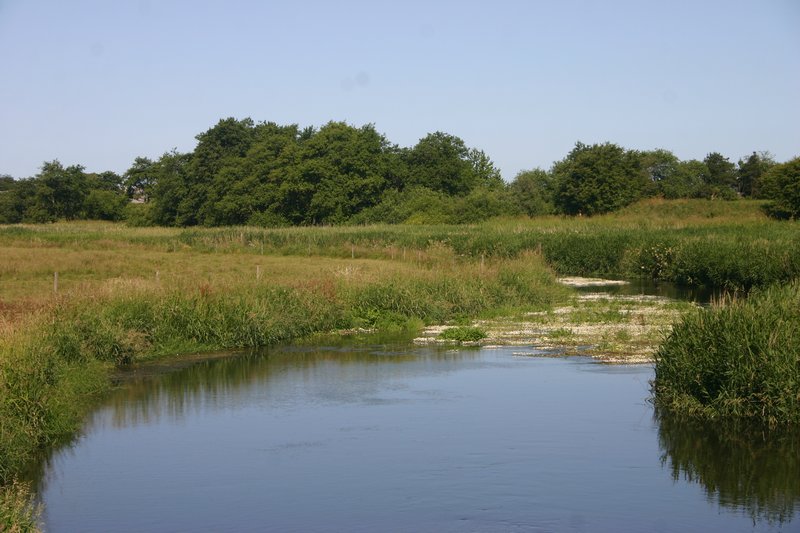
AGRO will be taking on a series of tasks that raise the expression ”making a difference” from a worn out cliché to a statement with substance that really means something in the real world.
The Ministry of Environment and Food of Denmark has asked us to carry out the tasks. The tasks comprise creating knowledge about and an overview of how agriculture can avoid emitting nitrogen to the environment to the detriment of our waters and the climate, now that the agricultural package permits farmers to use more fertiliser on their fields.
- The tasks not only involve agriculture but Danish society as a whole – not least because taxpayers will be the ones footing the bill for the establishment of new, collective measures. It is therefore crucial that we deliver well substantiated and thoroughly tested facts that can help authorities, agriculture and other players to choose the cheapest and most efficient solutions, says senior scientist Finn Plauborg, KLIMA.
The Ministry has granted an additional 15 m kroner for the total project, which will run for four years. Added to that is external funding under the auspices of a range of research projects and funds that have already been granted within the scope of the policy support contract. The budget for the work concerning the collective measures will be approximately 54 m kroner in the course of the four-year project.
A range of sub-projects
Part of the new project – the so-called Addendum 1 + 2 tasks – consists of six sub-projects that will deal with the following:
- Methods for improved mapping of field drains
- Lowlands and wetlands
- Controlled drainage
- Drained highlands, including several drainage stations and mapping of poorly drained land
- Databases for targeted regulation
- Improved maps
The other part of the of project (Addendum 3) concerns mini-wetlands with matrix (MMM). This part of the project includes establishment and operation of three new systems and long term follow up of the three test systems that are already established. The current MMM test systems will be tested for potential changes in efficiency, operation and maintenance and for how variations in the Danish landscape can be taken into consideration.
In addition to the large project for which we have been granted the extra 15 m kroner, AGRO will collaborate with BIOS on another task given to us by the Ministry. In this one we will evaluate a range of collective measures from Seges’ measures catalogue.
Some of the work in AGRO in the coming four years will therefore deal with acquiring knowledge about the various measures and creating an overview of what is available, what works under various conditions, what the costs are and possibly developing and investigating completely new measures.
Researchers met at an abbey – and learned from each other
One of the first activities in the big, new project was an internal seminar that was held at the abbey Vitskøl Kloster on February 23-24, 2017. On the first day of the seminar 19 scientific talks were given regarding lowlands and drainage of highlands. Most of the talks were presented by AGRO’s juniorVIP. There are large amounts of data, knowledge, experience and models behind these talks. Obviously, this wealth of knowledge and facts must be shared with each other so that we can build on it and create new knowledge.
The meeting made it evident that AGRO has what it takes: extensive expertise, knowledge, data and experience as well as connections to the agricultural sector, private companies and the advisory services.
- What we need to do now is to collaborate on solving the task at hand. We must use all the good competences we have, share our knowledge with each other and use each other’s skills. If we take the right approach and solve the task together it can be a teamwork across the boundaries of research areas, sections and flagships besides which we will also be collaborating with other departments in ST, says Finn Plauborg and continues:
- We have the chance to make a difference for Danish society, nature, the environment and agriculture.
Finn Plauborg points out that the work must not stop at theories, models and calculated scaling ups. It is also important that science becomes reality.
- We must constantly remember that we need to find feasible, efficient and cheap solutions that can be used in the landscape to remove nitrogen. We are obligated to society to do so – a society that will be spending millions of kroner on the measures. The solutions concern not only a single field, a single brook, a single mini-wetland or a single forest. They concern the whole agroeconomical landscape.
- Read the article: Generating knowledge on biofilters’ ability to reduce nitrogen leaching