AGRO is right out of the top drawer
Some months ago we read that agriculture at AU was number 9 in the world university rankings. This is a tremendously fine position when you consider that 10 years ago AU did not do either research or teaching within the area of agriculture. Granted, agriculture covers more than just the activities at AGRO, but it must be expected that our department accounts for a substantial share of these activities at AU. It is a position of which we may allow ourselves to be proud, and it has not been achieved easily. If anyone, we have been through many reorganisations
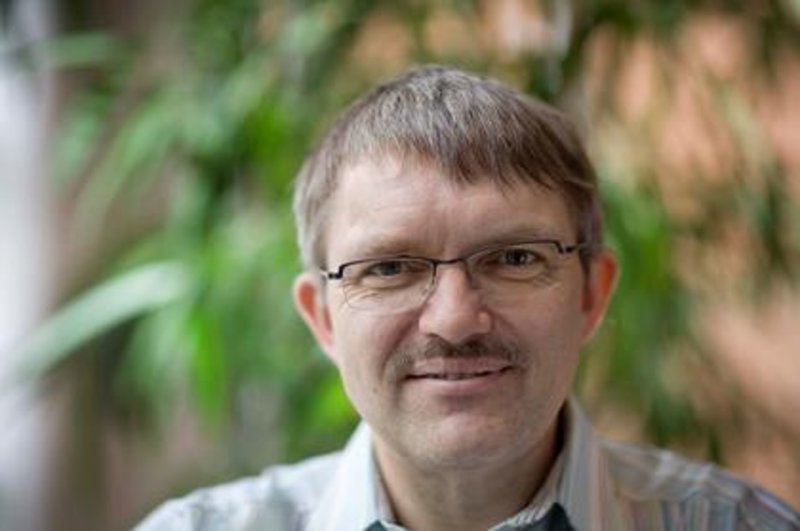
I myself began at “Statens Planteavlsforsøg” in the early 1980s. This was as a student assistant in the summer of 1980 at a small unit (“Dataanalytisk Laboratorium” near Lyngby north of Copenhagen). Actually, all units at “Statens Planteavlsforsøg” were then small and spread around the country, typically as research stations. The culture was directed at supporting Danish plant production, and a large part of the research was application oriented. Publication of research results was in our own journal “Tidsskrift for Planteavl” and the more popular communication in “Grøn Viden”. There was only little external funding; most of the money was provided through the front door directly from the Ministry of Agriculture.
The changes began during the 1980s when a large part of “Statens Planteavlsforsøg” and “Statens Husdyrbrugsforsøg” were united at Foulum and later on with the establishment of the research centre at Flakkebjerg. In 1997 “Danmarks JordbrugsForskning” (DJF) was established through unification of the research institutions under the Ministry of Agriculture concerned with crop growing, animal husbandry and technology, and 10 years later (2007) DJF became part of AU as the Faculty of Agricultural Sciences. During the same time there was a pronounced change in the nature of research towards strategic research with a high degree of external project funding. The ministerial demands for consultancy services also increased, especially concerning the agricultural impact on the environment.
When DJF merged into AU, the conditions changed considerably. From being an institution focusing on research and consultancy services we now became part of an educational institution. This has arguably proved to be a more extensive task than predicted, but we have handled it very well. At the recent “Plantekongres” I met many of our former students, and they asserted themselves in the most outstanding manner in the debate. At the same time we have had a large admission of PhD students and postdocs, who all contribute to strengthening the research development in the department.
This shows that we have been under constant transformation in the last 30 years. Not only have there been changes in organisation and funding. There have also been painful rounds of staff reductions, but in my opinion they have always taken place on an argumented basis, and we have handled them with a good involvement of the entire staff. This is also the reason why we are in such a strong position today.
Our development does not end here. We are still in the process of strengthening our international network in order that we may play a strong role, not only in Denmark and Europe but also internationally in some of the areas in which we have a strong position. At the same time we must strengthen the interdisciplinary collaboration with other departments at AU. By this we can get new knowledge and inspiration for a continuous development of agricultural research which is at the forefront of international research. It is guaranteed to be exiting – and challenging.