Flakkebjerg turns viridescent
Early summer has brought good weather so the tasks of sowing and spraying could get done without any problems. Now it’s time to do the counting and recording.
In Flakkebjerg the fields have been sown and sprayed and the crops are growing well in the fine summer weather. Maize, oilseed rape, clover and other crops are, however, not the only things taking advantage of the weather. Insects, weeds and diseases also like warm weather.
The developments in the fields do not go unheeded. No crops, insects, weeds or diseases are allowed to develop in secret since staff from MARK and scientists at Flakkebjerg are keeping a watchful eye on them.
Because now is the time to count and record. Beetles and bees, larvae and weeds, leaf spots and crop biomass growth – all are checked, sorted, measured and recorded.
- We have sprayed our cereals against septoria and rust and the vegetables have had a weed treatment. Our test apples and carrots are outsourced to private farms where they likely have now had a pest control treatment. What we are busily doing right now is counting and recording, explains agricultural technician Ulla Andersen to AGRO Biweekly’s rep.
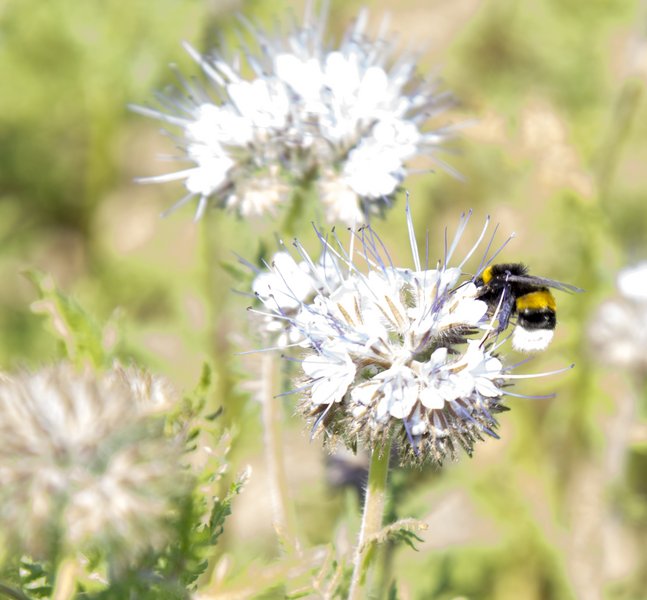
Her own task this brilliant summer’s day is to take samples of blue tansy. This beautiful flower is part of a study of bees and the pollination of white clover. The blue tansy is planted next to the clover, partly to lure the bees and partly to provide them with food when the white clover has finished flowering. The blue tansy flowers are snipped off to extend its flowering season and thus continue sending the bees to the clover.

Another current experiment is a fertilizer experiment in wheat. The two adjoining plots clearly show the difference between fertilising and not fertilising with nitrogen. The crops not receiving any nitrogen are the pale ones in the foreground. The experiment also seeks to answer the question of when the most optimal time is for applying the nitrogen fertiliser.

Although the summery weather makes for pleasant outdoor working conditions, not all tasks are outdoor ones. There are also experiments in greenhouses. Agricultural technician Berit Hansen explains that some of their experiments are with beetroot and chinese leaves, where seeds are exposed to different treatments in the germination chamber – such as different intensities of light or heat – following which their germination performance and growth are assessed.
