The new year includes challenges and possibilities
In 2018 policy support will occupy AGRO even more than in 2017. In that regard, we must ensure that our resources are in balance.
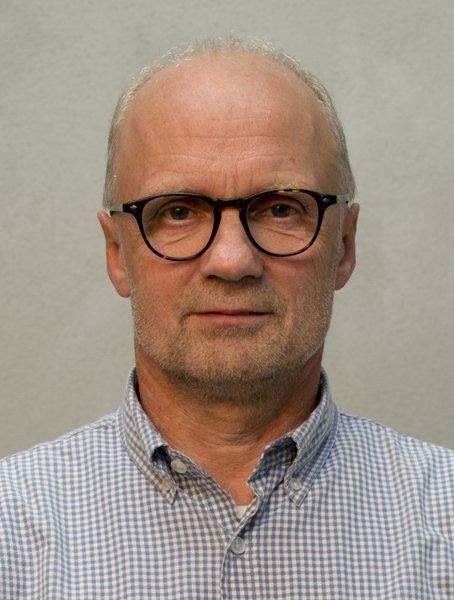
I would like to wish all staff in AGRO a happy New Year! I believe that 2018 will provide us with interesting and challenging tasks.
Policy support means a lot to AGRO. It affects the department in several ways – both in connection with our research efforts and our time and money. The policy support tasks, including the so-called advisory tasks, occupied us a lot in 2017, and they will do so even more in 2018. We must be well prepared for this.
Right now we are facing the challenge of ensuring sufficent control of staffing and finances in the numerous advisory tasks. We have had more than 130 advisory tasks in 2017 and the tendency for 2018 is rising.
We have been good at answering the advisory tasks but we cannot continue missing the budget. AGRO looks like it will have a budget deficit in 2017 of 4 million kroner. The cause is that at the end of the year we received many more tasks than were originally planned. The budget did project a deficit but not such a large one.
Advisory tasks demand many resources
One of the advisory tasks that has placed extra demands on our resources is the NLES4 case. The latest debate on the subject has meant that we have to go back and trawl through many of the memos from the autumn of 2015. We also have four cases regarding access to information on the topic.
Other advisory tasks that have taken up a lot of AGRO's time and energy in 2017 and that will continue to do so in 2018, are off-field nitrogen mitigation measures, especially the so-called addendum tasks that are a direct result of the Agricultural Package from December 2015. Despite hurdles along the way the new projects are progressing satisfactorily even though there have been postponements.
Before the first sod could be turned at the new mini-wetland construction at Gyldenholm by Flakkebjerg, the permissions for establishing it needed to go though a series of hearings. There was quite a bit of feedback, which prolonged the process. It took nine months instead of the two months we had originally expected. This is a sign that democracy works, but has meant that the whole process is delayed. Construction began late and is now taking place in muddy or frozen winter soil.
We have solved the tasks but they have taken their toll on our financial and human resources. The situation is serious and we need to find a solution. We need a more stringent management of staffing planning and budget control. In short, we need to describe, plan and prioritise the tasks better. This requires new tools and therefore the department management has initiated a process to develop these in collaboration with the finance department and DCA. In the future, budgets and staffing of large advisory tasks will be manged in a similar way as in research projects with external funding and there will be a multi-year time horizon.
The good efforts are greatly appreciated
I would like to thank the staff for all the good policy support answers AGRO has provided. They have required huge efforts. I would also like to praise Per Kudsk and Jørgen E. Olesen for their editorials in 2017, in which they each took different angles on policy support.
Read: AGRO is well prepared to compete for policy support tasks (by Per Kudsk)
Read: Integrity in our research and policy support is imperative (by Jørgen E. Olesen))
There is no doubt that we have talented people on the policy support tasks. AGRO’s researchers are good at delivering answers. We are also good at acquiring research funding and at publishing articles. These are key elements for ensurig that we stand strong when the policy support tasks are publicly tendered in the near future.
We can also be satisfied from an international perspective. We continue to rank among the top ten in the world within two topics that concern agriculture, including ”soil science”.
Read: Aarhus University moves upward on the NTU ranking
Read: Agricultural sciences at Aarhus University again at the top
We also have good international research collaboration. In 2017 we pulled home two Horizon 2020 projects that are coordinated from AGRO. Per Kudsk is the coordinator of IWMPRAISE, a project with a budget of 7.1 mllion euros regarding integrated weed management. Mogens Støvring Hovmøller is the coordinator for the project ”RustWatch: A European early-warning system for wheat rust diseases” with a budget of 37.5 million kroner. This project is about wheat rust and just needs the final signatures before kick-off.
Flakkebjerg is also doing well in other areas. We have signed a series of contracts with the plant protection organisation Dansk Planteværn amounting to 16.5 million kroner, which is 2.7 million kroner more than last year. This collaboration supportds the development of our knowledge and is very important for AGRO. I would like to thank all the staff who make these things possible - you have done such a good job.
AGRO is hiring more staff
It may be possible that when you hear the word ”deficit” you think ”reduction”. An important point in this regard is that we will not be reducing staff. We still plan on hiring more temporary and permanent staff in AGRO.
Several applications are in process. Right now we are looking at two professor and three tenure track/senior researcher positions. In the course of 2018 we will announce five more vacant positions, namely a senior researcher and four professors. We have some good applicants for the positions we have already announced. I am pleased with the many announcements and that we have attracted good applicants.
In 2018 AGRO will focus even more on the UN’s sustainable development goals. They align very well with our research flagships and policy support tasks.