In the UN’s service for Denmark
Danish knowledge about sustainable agriculture can make a big difference with regard to the work carried out in the United Nations Economic Council (UNECE) – to the mutual benefit of the environment and development of the industry in Denmark and abroad.
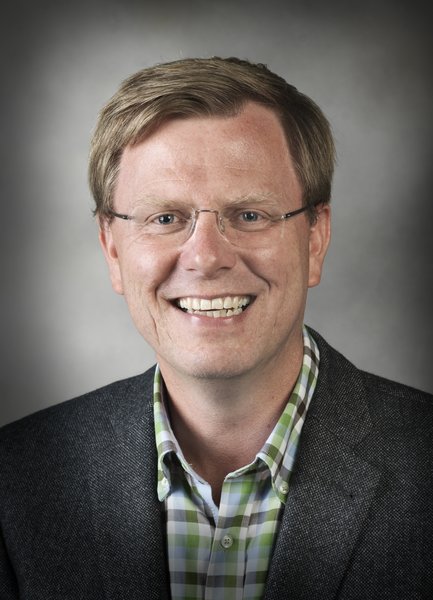
Since 2013 I have had the pleasure of being the chairman of the United Nations Economic Council – Task Force for Reactive Nitrogen (UN ECE-TFRN). The work covers Europe, USA, Canada, Turkey, Israel and the Eastern Europe, Caucasus and Central Asia (EECCA) countries (Armenia, Azerbaijan, Belarus, Georgia, Kazakhstan, Kyrgyzstan, Moldova, Russian Federation, Tajikistan, Turkmenistan, Ukraine and Uzbekistan).
The special knowledge that we have in Denmark regarding sustainable use of nitrogen in agriculture is also very relevant to international issues. For example, the solutions we can show regarding aquatic environment plans and ammonia action plans, our extensive research in this area and, not least, the perspectives of the latest targeted measures attract much interest.
Beneficial to spread Danish knowledge
Not only can Danish knowledge help the environment in other countries, it is also to a great extent in Denmark’s interest to spread our solutions and ideas. In the first place, this provides good opportunities for exporting Danish environmental and agricultural technology, such as slurry equipment, low-emission animal housing systems, air purification systems and biogas plants, and is good PR for environmentally friendly Danish products, including organics and high value animal products for export.
In the second place, it gives us a competitive edge, relatively speaking, if the expensive environmental actions we introduce in Denmark are spread to other countries so that unfair competition at the expense of the environment and climate are avoided. By contributing actively to international efforts we can achieve a lot of synergy. It is a good thing that the Danish government has chosen to prioritise this area.
Several expert panels deal with nitrogen
Under the task force, there are several expert panels in which researchers from a wide range of countries, including Denmark, take part. Here are some examples:
- EPNB - Expert Panel on Nitrogen Budgets, that works with standardised methods for accounting for nitrogen balances, flows and losses.
- EPMAN - Expert Panel on Mitigating Agricultural Nitrogen, that works with guides for good agricultural practice for reducing ammonia emissions from farms, which constitutes a major part of the pollution that moves across borders and is under UNECE’s air convention.
- EPNF - Expert Panel on Nitrogen and Food, that improves the understanding of how changes in dietary habits and consumption drive nitrogen pollution and greenhouse gas emissions, and can be used as an instrument to reduce these.
In Denmark we can derive great benefit from the work carried out in these panels and vice versa: our research can benefit the panels.
Collaboration leads to new collaboration
The task force is thus an important forum for international research efforts. It was a fulcrum for the European Nitrogen Assessment, which with strong Danish involvement originated from the extensive (more than 100 million DKK) EU project NitroEurope. It was in connection with this project that the ensuing Danish research alliance regarding nitrogen, www.dNmark.org, originated (30 million DKK), initiated by agricultural researchers from the universities in Aarhus, Copenhagen and Wageningen.
Aarhus University takes part in similar initiatives, such as the EU Horizon 2020 twinning project NitroPortugal. At the present, we are concentrating our efforts on starting INMS - Towards the Establishment of an International Nitrogen Management System), which with its 39 million DKK from the UN’s Global Environmental Facility and more than 300 million DKK in co-funding from more than 70 partners from all over the world, is preparing a report on global nitrogen assessment. The report will be published by Cambridge University Press in 2021.
There is potential in the EECCA countries
INMS includes demonstration areas in the form of selected catchment areas in various parts of the world with examples of nitrogen pollution across national borders. The special focus area in Europe is in relation to the EECCA countries, where there is particularly large potential for improving the use of nitrogen (and export of Danish knowledge and technology).
Aarhus University therefore also has a share and special interest in this work, which will be connected to our EECCA expert panel under the TFRN. The EECCA countries are also interesting to us as a growth market for our agricultural products, as an investment area and as an area in which reduced nitrogen pollution can have great importance for our own waters, including the Baltic Sea.
Aarhus University also contributes to a range of other INMS work packages that relate to special areas of development, such as improved nitrogen balances, scenarios for the future development of the agricultural, food and energy sectors, and development of methods for calculating nitrogen footprints for assessment of more sustainable consumption patterns.
We can influence the future
The UN arena will thus be a key position for our agricultural research in the years to come in relation to the relevance of our national research on the global scene, where efforts regarding air and climate will be of utmost importance, and particularly in relation to the process regarding the UN’s 17 sustainable development goals, which are the subject of many strong efforts. I am very pleased that the Ministry of Environment and Food of Denmark supports TFRN, such as by its active contributions to the efforts in UNECE, which is the umbrella for the task force, and by its support at the recent 13th TFRN annual meeting in Ottawa, Canada.
The task force can also contribute to Denmark’s possibilities for influencing the agenda in the EU and for living up to the EU’s directive requirements. In collaboration with the EU Commission in Brussels, we are planning to let the next annual meeting be about the potentials of a more sustainable use of nitrogen related to synergies with air, water and climate effects, and as a follow up of an earlier workshop. This is also an area in which Denmark has particular skills and knowledge. It will be interesting to see how we can learn from the revised Danish agricultural and environmental policies of recent years.
The three co-chairmen of the UN’s Task Force for Reactive Nitrogen (TRFN) are (from left) Tommy Dalgaard, Claudia Cordovil, Portugal, and Mark Sutton, Scotland. Last year, TFRN’s annual meeting was held on Campus Aarhus with the participation of the expert panels, researchers and policymakers from 27 countries:
