The department management team on a study trip in France, Belgium and the Netherlands
Agriculture faces a very extensive green transition in which new knowledge, technologies and cultivation systems must be brought into use. This requires that we at AGRO upgrade our facilities for research into new cultivation systems.

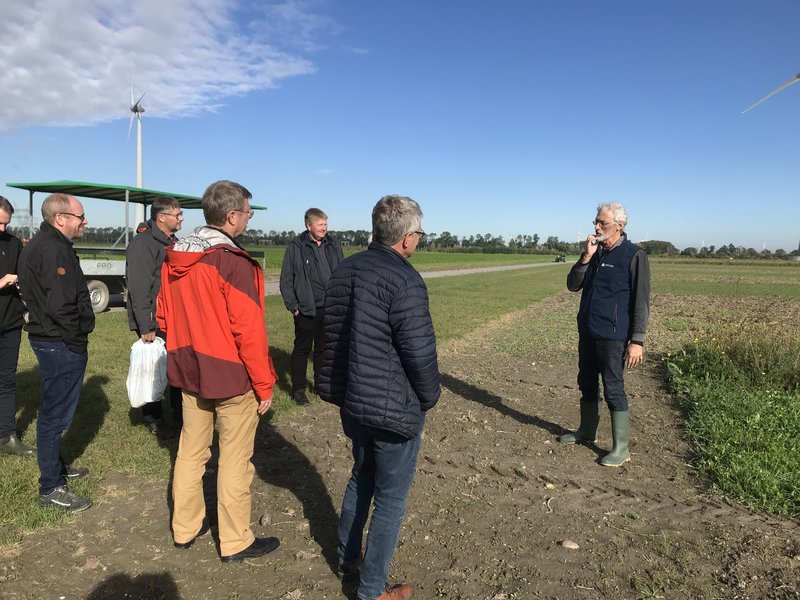
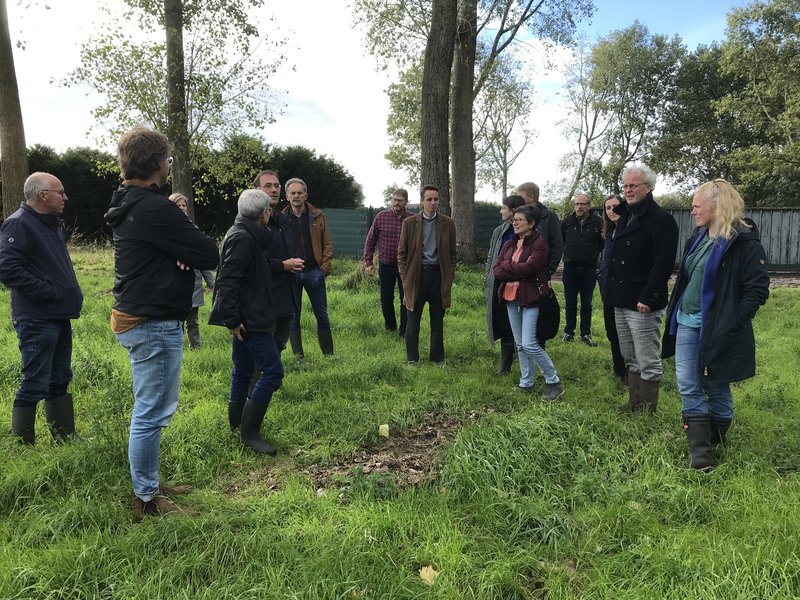
Agriculture faces a very extensive green transition in which new knowledge, technologies and cultivation systems must be brought into use. This requires that we at AGRO upgrade our facilities for research into new cultivation systems. Similar ideas are under consideration in other countries, and to get inspiration for the development of our experimental areas at both Foulum and Flakkebjerg, AGRO’s management team was on an inspiration trip on 28-30 September to our colleagues in France, Belgium and the Netherlands.
We began our trip on Wednesday at INRAE in Dijon. Here, they have turned an entire experimental farm into an experiment with pesticide-free farming, called the CA-SYS platform. Its purpose is to:
- Design and evaluate new agroecological systems
- Study the transition from the current cultivation systems to new agroecological systems with the purpose of increasing the yielding capacity of the system as well as developing cultivation based on a broad spectrum of criteria
- Breed new varieties for adapted agroecological practice, for instance increased stress tolerance and increased interaction between plants and microbes
- Understand the ecological processes going on in agroecological systems
- Develop and adapt experimental methods for studying agroecological systems
The CA-SYS platform is an experiment with fields distributed over four different systems:
- System based on direct sowing and use of catch crops
- System based on direct sowing with occasional soil tillage
- System with soil tillage with application of extra nitrogen
- System with soil tillage without application of nitrogen
There was a special focus on crop rotation and the interaction between fields and the use of flower strips and buffer zones to reduce diseases and pests. We visited the fields and were confronted with some of the challenges, which especially were problems with managing weed pressure in the systems with no ploughing and too low yield and too little competition from the crop in the systems with little use of fertiliser. However, there were some interesting aspects in relation to the use of permanent flower strips and the spatial organisation of the fields.
On Thursday we visited ILVO near Gent in Belgium. ILVO is an institution which resembles AGRO in many ways. However, ILVO has a large group on agroecology which deals with the social-science aspects of the development of agroecology, including the work with Living Labs. In the morning we had a good introduction to ILVO and the areas which they work on. It was good to see that we at AGRO already have a good collaboration with ILVO in many areas.
In the afternoon we visited one of the private organic farms with which ILVO collaborates under the auspices of the Living Lab on agroecology and organic farming. Here, many exciting principles are tested of how soil fertility can be increased and how the use of external input can be reduced. For example, it was interesting to hear how they plan to carry out ploughless tillage in organic farming with a lower weed pressure especially through use of grass clover in the crop rotation. This is no doubt something that should inspire us.
On Friday we had gone to the Netherlands. In the morning we visited Wageningen’s (WUR) trial station near Lelystad. We were introduced to the “Farm of the future”, which is a research and demonstration platform that integrates agroecology, mechanisation, digitalisation, energy, circularity and economics. As regards agroecology there was a special focus on soil quality, crop diversity and maintenance of landscape elements. The field trials are particularly characterised by strip cultivation of a number of different crops and crop rotation but also by development of new machinery to handle this. There is much that we can learn from the approach taken at WUR to integrate agroecological principles with development of new technology.
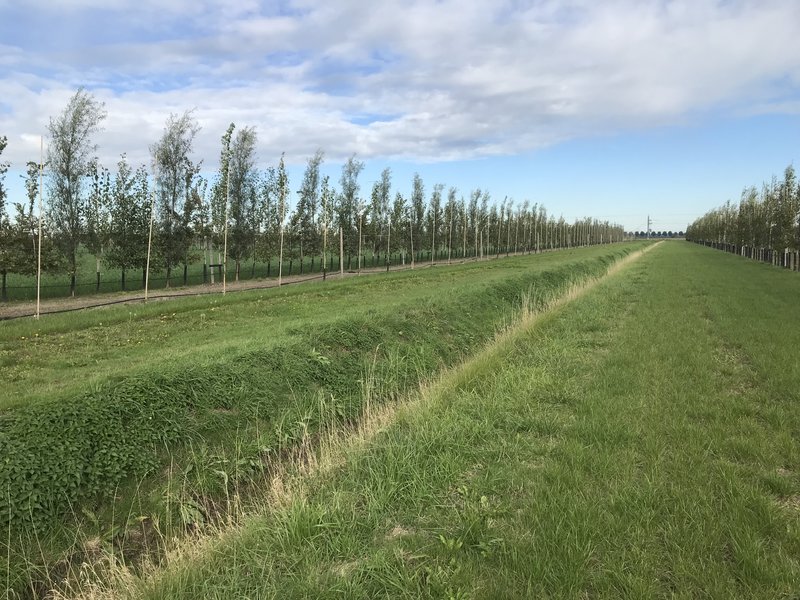
In Lelystad we also visited an experimental area where they try to develop agroforestry and where they study the effect of windbreaks on crop productivity. This is also an area where collaboration is possible.
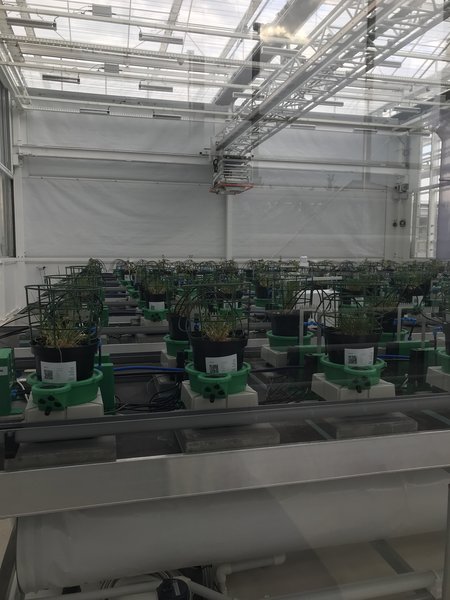
On Friday afternoon we were at Wageningen where we were shown a large new phenotyping facility (NPEC), where plants are grown in pots that then can be studied in detail with cameras and all sorts of sensors. It was very impressive, but probably not something that we at AGRO should focus on. On the other hand, there is a good reason to consider how we can make a systematised data collection from new agroecological field trials that can be used for a better understanding of the interaction in the agroecosystem – and for in situ phenotyping of crops and varieties.
We will take up this subject at the AGRO researcher days on 9 November. We need to find out how we develop our infrastructure in this area. There are major perspectives in working with new forms of field trials, in both research and teaching. But we need to have a good plan for this before we get started in earnest