Latest news from Foulumgaard
We are looking forward to yet another challenging and interesting growing season at Foulumgaard with lots of active research trials and a bit of re-building.
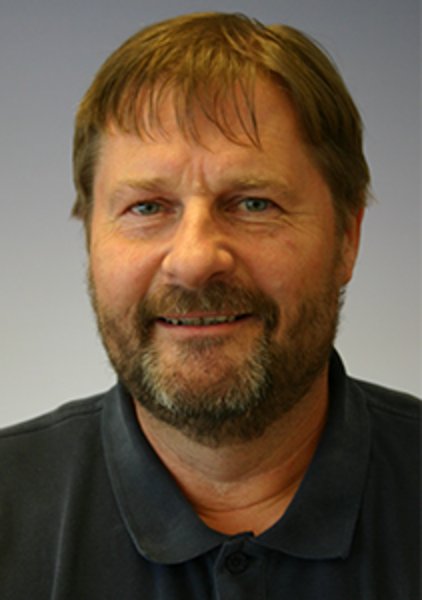
This winter MARK was reorganised following the early retirement of Karen E. Henriksen. This means that AGRO now has three independent field research units in Flakkebjerg, Askov (including activities in Jyndevad) and Foulumgaard.
The managers Henning Thomsen in Askov and myself at Foulumgaard will continue as managers. In Flakkebjerg Thomas Birger Jensen has been appointed as the new manager.
The world as seen from Foulumgaard
This spring has been cold and late. At least that is what we are telling ourselves but according to the Danish weather authority DMI this spring has not been atypical. The adage that the ”memory of Man” only lasts three weeks when it comes to remembering the weather is probably true. Here in the beginning of May we have almost finished establishing the research trials. All we need now is to plant the potatoes and sow the maize.
We are presently quite busy because we are lucky enough to have lots of trials. Both the semifield and the fields are almost filled to the brim when we take into consideration that we also need to equalise the fields between the trials.
We are actually so fully booked that it has been necessary to rent more land because a potato trial suddenly required five more hectares of sandy soil than we have access to. This means that we now have 10 hectares on Havrisvej, which is approximately 11 km west of Foulum (15 km by road). This gives us a bit more time spent on the road compared to working in the fields around Foulumgaard but not more that we feel we can live with. We do have a couple of years of experience with it by now.
With regard to staff, we have welcomed a new colleague, Søren Anton Nielsen, on May 1, 2017. Søren Anton is not unfamiliar with Foulum since he has worked for many years with the cattle trials in Foulum.
Wide range of research platforms
The trials at Foulumgaard are a mix of research platforms with the same crop rotations and/or tilling strategies over a long period and a few studies that run for only one to four years.
Some of the platforms have been running for more than 20 years. This is the case for the tillage study CENTS which studies reduced tillage. The crop this year is winter wheat.
The same goes for the crop rotation trial in which conventional and organic crop rotations are compared. The current project period is covered by the project ROWCROP, where the focus is on the possibilities for row cropping and cultivation of grain.
The platform with organic cattle crop rotation will re-start in 2017 after having been dormant for the past couple of years. We have maintained the crop rotation but, apart from a few small PhD trials, not much data has been fetched from the system. Data mining will be re-activated from this year in the SMARTGRASS project.
In the DONG platform, which has kept its name even though DONG is no longer one of the sponsors, the past five years have seen a focus on maximum biomass production. The aim here is to use the biomass in a biorefinery. The project will also follow development in the soil’s carbon sink by, among other things, having plots without crops that we can use for comparison.
Another biomass platform consists of perennial energy crops where the oldest trials began in 1992. At the present we have willow, poplar , hazel, alder and miscanthus in the trials.
The VIRKN platform began two years ago. Here the focus is on the use of catch crops. In 2017 it will be extended with a screening study where we will evaluate a series of new catch crop candidates. VIRKN is one of those studies located on both JB4 soil at Foulumgaard and JB1 soil at Havris.
Another study that is located both places is a three-year maize study (GylleIT) with a focus on using slurry as a start fertiliser. This is a collaborative project with Seges.
The new sandy soil project is POTENTIAL. This is an EU project that focuses on graduated irrigation and fertilisation of potatoes based on data from the CropSat satellittes and data collected by drones. This is also a three-year study.
Finally, we have several small trials, including some in cooperation with the Department of Engineering. The department has researchers in Foulum but does not have its own research fields. We also collaborate closely with the engineers on slurry equipment and application. In the semifield new trials with maize and spring barley will be staring in the lysimeters.
Help give PhD students a good start
Many of the trials have PhD students whose projects add-ons to the trials that we already carry out. In this connection I would like to appeal to the supervisors of the PhD students who will be using our facilities.
Whether we are speaking of field trials, semifield trials or trials that are at other locations where there is a need for drying cabinets, grinders, etc. at Foulumgaard, then please come and have a chat with us as soon as you know there will be a need for these facilities. We can then plan for these activities so they fit in with the other activities. In this way, we can avoid suddenly having a student with 100 plant samples that need to be dried on the very same day where everything is already occupied. Unfortunately, we have already seen this happen.
With regard to buildings, we will be doing a bit of re-building at Foulumgaard in order to, among other things, set up a separate grinding room. At the present, grinding is carried out in the same room as the drying cabinets are located in. This causes problems with noise and dust, especially when there are several processes going on at the same time. The changes mean that we will need to convert some of the machine shed to a workshop.