New degree programme structure effective from the fall
A new structure of the food and agricultural science programmes will help to keep the students on the bachelor programme in Agrobiology.
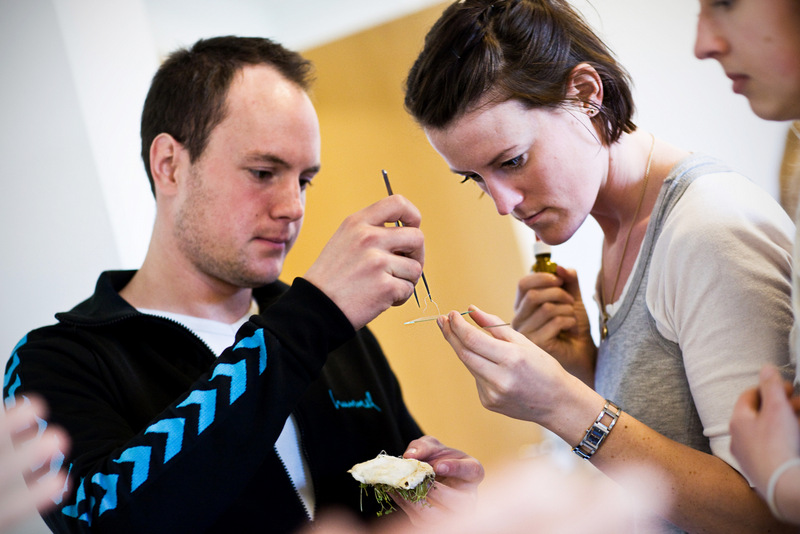
Calculus 1, calculus 2, organic chemistry, inorganic chemistry … where are the agrobiological subjects that the students are most eager for? This was the question that many students in Agrobiology asked the first year of their studies. Several dropped out because they did not feel that the course was ”green” enough.
All this will change with the new semester structure that becomes effective from the autumn of 2017. The first semester will offer purely agrobiological subjects while the second semester will ease the students gently into the obligatory subjects with two five-point courses in inorganic and organic chemistry. Calculus and statistics will not be on the menu until the third and fourth semesters, at which time the students will also follow the new obligatory subject agromicrobiology. The third semester will also be the one when the students choose in which line they want to specialise. The final line subjects in the fifth semester will enable the students to choose a bachelor project, which they should complete in the sixth semester.
- The first year students missed the agrobiological subjects, since the subjects did not turn up until later on in the course. This caused a relatively large dropout rate. In addition, we have not communicated the reasons for having to take these “boring” basic courses well enough. We have addressed this problem with the new structure, says the chairman of AGRO’s education committee Bernd Wollenweber and continues:
- We have now created synergy between the basic required courses and the line courses, e.g. between calculus, where you learn how to do regression analysis, and learning about analysing dose responses for pesticides, where you learn why you do regression analysis. All three lines now have progression, i.e. where you build on what was learned previously.
Besides rearranging the subjects, the examination forms and times will change. Only four exams per semester will be allowed. This means that even if the student is following five different courses in a semester, the student will still only have four exams. However, it will be possible to have ongoing evaluations, such as multiple choice quizzes, papers, or oral presentations.
There have not been many changes to the master programmes. The most important one is to ensure better progression.
You can also read the article Degree programmes find new ways, which describes additional details about the new semester structure.