Public sector consultancy
AGRO has a long tradition of providing research-based consultancy to the Ministry of Food, Agriculture and Fisheries of Denmark as well as a number of other ministries on issues directly or indirectly related to the regulation of agriculture, environment and nature.
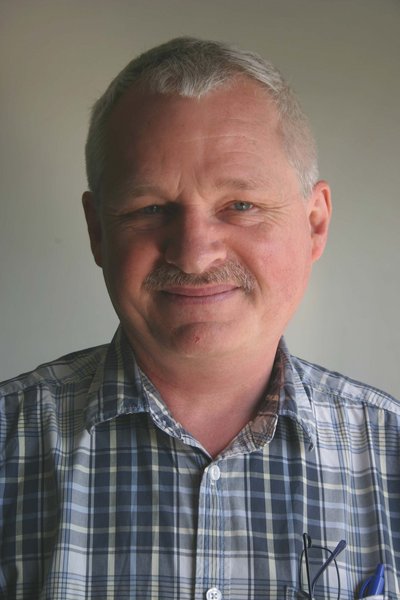
This process stretches all the way back to before AGRO became part of AU, and even further back it was mostly focused on an efficient production of food. As people became aware of the environmental consequences of intensive farming, the focus shifted to finding solutions to these challenges. A considerable part of AGRO’s basic funding has always come from our contracts with the Ministry, including many of our good research facilities.
An important role in society
At present, we are deeply involved in finding solutions to the major challenges associated with agriculture’s emissions of nitrogen to the aquatic environment and greenhouse gases to the atmosphere. However, it is not our job to propose or give the ministries specific advice on how the regulations and rules should be drafted. The ministries have many other sources of information and ultimately must make political trade-offs that also include socio-economic considerations, etc. Our role is limited to providing professional advice, for example illustrate the consequences of –– how different scenarios could affect the environment and/or the productivity in agriculture. We must safeguard the so-called arm’s length principle. We have two meetings a year with the ministry at which we can present our ideas for interesting topics. Ultimately, however, it is always the ministry that formulates and poses the questions or the tasks, which may also include investigations, data collection and monitoring tasks of longer duration. From here, it is us at AU who take over and try to shed light on the issue as objectively as possible. There may well be contacts with stakeholders and a round of comments with the ministries afterwards. The important thing here is that these are documented and passes through the DCA’s quality assurance procedures.
Objectivity, diversity and interdisciplinarity
One can always raise questions concerning our objectivity in solving tasks. Can anyone be objective at all? The answer to that question is probably that no one can. However, we can get closer by solving the larger tasks that link to current public debates in teams that contain both diversity and interdisciplinarity. This enables and increases the likelihood that different angles of the issues will be addressed and examined, which should always be a focus point when we solve tasks. I am the theme coordinator for the focus area of Climate-smart production systems, for which one of the major annual tasks is to write/update the so-called Climate Instrument Catalogue, which describes the latest research into ways of reducing greenhouse gas emissions from agriculture. This is an issue that has obviously received a certain amount of attention in the ministries because of national and international climate goals and commitments. This year, no less than 8 AU departments/centres, 40 authors and many peer-reviewers were involved in this project. I think that this has resulted in a better product than last year as a result of greater interdisciplinarity than previously. We have begun the discussion about whether we might be living in a bubble a little too much and limiting our view to the systems and solutions we already know.
The sour and the sweet
Public sector consultancy presents a number of challenges. It is well known that the budget is shrinking year by year, which is not in harmony with the demand for a growing interdisciplinary approach, which tends to lead to a greater use of resources. We have the problem that the ministries prefer reports in Danish. After all, legislation and circulars are written in Danish. However, an increasing number of our employees are English-speaking. This makes it harder to bring their skills into play, limits diversity and may ultimately mean poorer task performance. It can also be conflictual, especially for early career researchers, to spend time on the more general issues in the public sector consultancy. Their primary interest is usually to explore issues that require a high degree of specialisation in order to publish internationally. On the positive side, the fact that public sector consultancy often provides new angles on one’s new research is important. This clarifies knowledge gaps, opportunities and barriers to the application of your own results in a professional or societal context. It is highly satisfying to see our research translated into solutions to major societal problems through public sector consultancy. Last, but not least, it is very inspiring to get to know colleagues from the other departments at TECH. Meeting and seeing the great commitment that colleagues put into solving the tasks in the best way possible, contributes to creating cohesion at TECH.