Reflections on the first year in the job as manager
After the first year in the job as manager of the field research facilities in Flakkebjerg, I have had some thoughts about how the year has been and how we should do things in the future.
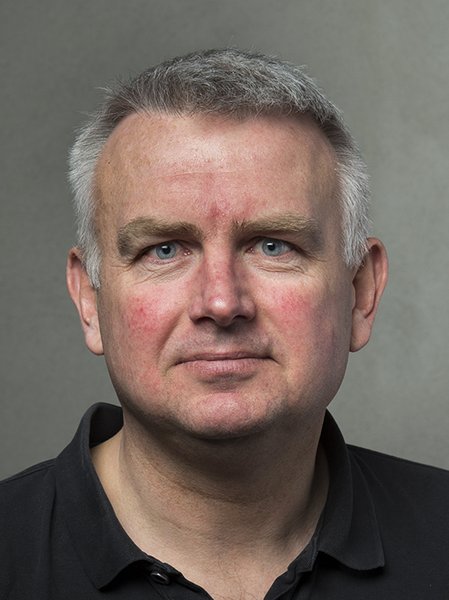
A little over a year has gone by since I started working in Flakkebjerg with responsibility for the field group. The job was posted because Karen Henriksen had chosen to retire. I am not actually her replacement because it was decided to divide her job so that the responsibility now lies with the managers of each of the three research stations Askov, Foulumgaard and Flakkebjerg. The three of us collaborate really well with each other and I enjoy having these two experienced fellows from Jutland as sounding boards.
I had a short start-up period with Karen and that was a great help. Otherwise, I spent time getting an impression of the work tasks and areas of responsibility. Flakkebjerg is big and there are many tasks. The field technician group alone consists of 27-30 employees. Even though things are carried independently, and everyone works in their own groups, there are still many questions to answer and decisions to be made.
Larger fields would be useful
There are 185 ha fields. Even though it might not sound like a lot, we must admit that not all the areas are equally well suited for research. On the positive side, the number of trials has increased markedly. However, this means that crop rotations with many different crops put a lot of pressure on the area we have.
Many fields are split up into small plots that, when we look at the next couple of years, is not so appropriate. After the next harvest we will therefore rent an extra 32 ha and work on finding more land. This means that we will have quite a few more hectares to manage. The plan is to drop the land that is not suited for research and concentrate solely on the good research land. Each year, we must make contracts with a contractor or a neighbor regarding management of the land that we are not using for research purposes.
I have previously worked in a research company. We had the same problems regarding land and small plots, which took up a lot of time with regard to sowing and with regard to allotment of the trials to field plots.
Machine fleet is old
I believe we need to see things in a greater perspective. Small fields need small machines. If we want to be efficient, we need larger equipment and more turning room at the headland.
Finances are a significant factor when we have so much land, greenhouses and semi-field. I feel it has been difficult because there have been many wishes for new investments. We have a lot of equipment, some of which is rather old. Some of it is so old that it can be difficult to find spare parts. In some cases, the spare parts may even need to be produced before we can acquire them.
It can be difficult to distinguish the wishes because each person feels that their needs are most important. I think we have a big challenge in the future, especially with new technology, which is more advanced and therefore expensive.
We have access to five combine harvesters but they are more than 30 years old. We need to lay a plan for renewal. A new combine harvester costs about 1.5 million kroner but can harvest as much as two of the old ones. I think we have more than 15 tractors. Even though they are old and not used so much, it still costs to maintain them. The latest thing is self-driving tractors. Perhaps they will be upon us before we expect it.
We are subject to price fluctuations
Since we have a lot of land, we also do a lot of buying and selling. Purchase of fertiliser, seeds, and plant protection products is a large item in the accounts. We have quite a few crops that we can sell and that provide us with a welcome income. However, with regard to both fertiliser and crops the prices fluctuate quite a bit.
Many suppose that tiny Denmark does not mean so much on the global market, but the global market means a lot with regard to prices we buy our goods for and the prices we sell our crops for. For example, the price of fertiliser has fluctuated in the past couple of years by up to 40 percent. We need to be sharp and see if we cannot be more merchant-like.
I have been asked about what I think is the greatest challenge or difference in relation to working in the private sector compared to the public sector. I think that in the private sector you look more at the bottom line after the year has gone by – how you get things to run smoothly and efficiently and if there is anything that can be done differently or better.
Specialisation has its benefits
Efficiency is not everything; quality is also important. Quality creates credibility and I think that is a must for what we do. If doubts arise about whether we are doing things right it creates distrust. Then it becomes easy for other to make a bid for the tasks we carry out for the authorities and private companies.
In general, I believe that there is good fighting spirit and that most of the employees really get into their work. But I must be honest and say that I think perhaps the quality and the procedures are lacking, and they should be improved. I would like to see a bit more new thoughts instead of just doing what we usually do.
In Flakkebjerg it has been customary to work in groups. At the same time, everything is managed by project, e.g. time and money. This means that the advantages of being in big groups disappears a bit. New technology also places demands on each employee’s skills.
Should we all be specialists in all areas? Or could there be benefits in looking at what each employee is best at and most interested in learning about? This is valid for both professional groups and for technology. As it is now, everyone embraces a wide range of tasks, drives machines, evaluates trials, and treats data.
I know that some people are afraid of losing ownership of the task by not following it all the way through. I do not think that you need to be afraid of that. One of the most important things in a good working environment is information. We can certainly improve on that; by looking back on a busy season and saying, ”We did well”, celebrating the positive things and learning from the mistakes that we cannot avoid making once in a while.
It is important that we reach our goals with a common spirit. We can achieve this by more collaboration across groups. No matter which area of expertise we work in, there will be ups and downs in the amount of activity in the groups from year to year. We can take advantage of this and help each other.
Contract work for companies
In Flakkebjerg we have many contracts with companies where we test new and old pesticides and biological products. The contracts mean that we can maintain a high level of activity in Flakkebjerg, because they contribute financially to the overall operation. The companies gain from exchanging advice and experience with our researchers, and we benefit from being at the forefront with new knowledge.
It will be interesting to see if we can maintain the contact and activities on the same or a higher level than in recent years. The increased mobility between countries has led manufacturers to seek the places where they get the most out of their data. While we are said to be good, quality costs.
We have a challenge with the generational shift amongst researchers and technicians because the average age is rather high. We must ensure in time that we find employees who are suited to deal with our contract work. I do not think it will be a problem because we already have technicians who can do this.
Field work coming along nicely
The large amounts of rain we got in 2017 made the harvest and sowing very difficult. Out winter crops could look better but all things considering it looks okay. Unfortunately, the field with beets has been damaged seriously due to a heavy beet harvester. We have made a deal with a neighbour that from now on he will be in charge of harvesting the beets in exchange for him only doing so when the weather and soil are expedient.
We still need to sow the last of the spring crops, spread the last of the fertiliser and spray a few fields. All in all, things went really well when spring finally arrived. We followed a plan that could be adapted to being hit by a lock-out, so many of our staff made a big effort to set up as many of the trials as possible before the lock-out would have hit us. Fortunately, there was a settlement. We hope that it will not be like this every time a labour agreement needs to be reached.
At the end of the day, I still think the job is interesting and with many exciting challenges – even though there have been frustrations and not just from my side. I have also involved myself in the work tasks and areas of responsibility that were previously in the hands of others. I hope that I can contribute to keeping Flakkebjerg a good and attractive work place.