”To think, to judge and to act”
This was the motto of J.C. la Cour, one of Denmark’s first graduates in agriculture, and founder of the first standard agricultural college in Lyngby. And the same motto we might want for our own students in agricultural sciences. But how is this motto something special? And how can it contribute to revitalising the new degree programmes we currently have in the pipeline? This is discussed based on a chapter in the book about recent agricultural history, which is being published this month.
In the coming years we can look forward to an exciting task of revitalising and innovating the agricultural degree programmes at Aarhus University, and at the same time we will have new degree programmes in veterinary medicine and animal science at AU Viborg in Foulum.
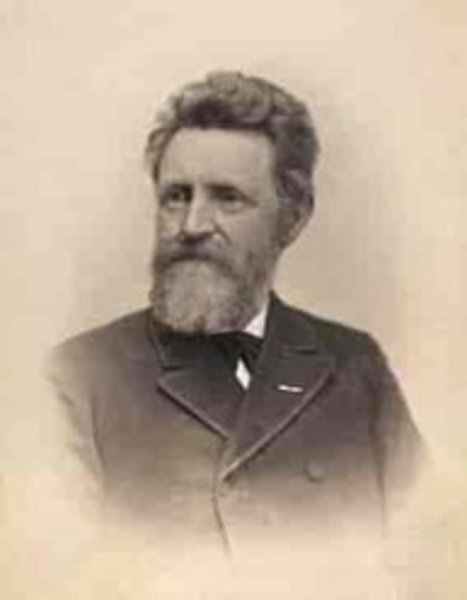
Many good concepts for strengthened degree programmes are in play. This especially apply to problem-based learning where we have a lot to offer and with respect to the so-called Living Labs with full-scale experiments and platforms for education and learning, and which in the best agroecological sustainability style include both the natural science and the socio-economic factors that are of importance to the many stakeholders in agriculture. An important point is both to rethink the degree programmes around the burning platforms of our time regarding green transition, climate, environment, biodiversity and sustainability which appeal so much to the young people of today and at the same time to continue building on the solid foundation for education and learning which J.C. la Cour (Figure 1) formulated with his motto of ”To think, to judge and to act”.
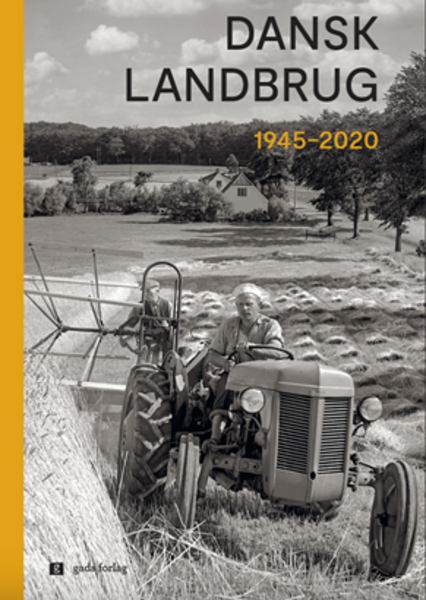
These questions are considered in the chapter about “Uddannelse, rådgivning og videnskab i en foranderlig tid” in a completely new book on “Dansk Landbrug 1945-2020” (https://issuu.com/gads-forlag/docs/dansk_landbrug_issuu), which is presented on 26 November at a reception at “Det Grønne Museum” (“The Danish Agricultural Museum”) – a museum of which J.C. la Cour was also the founder!
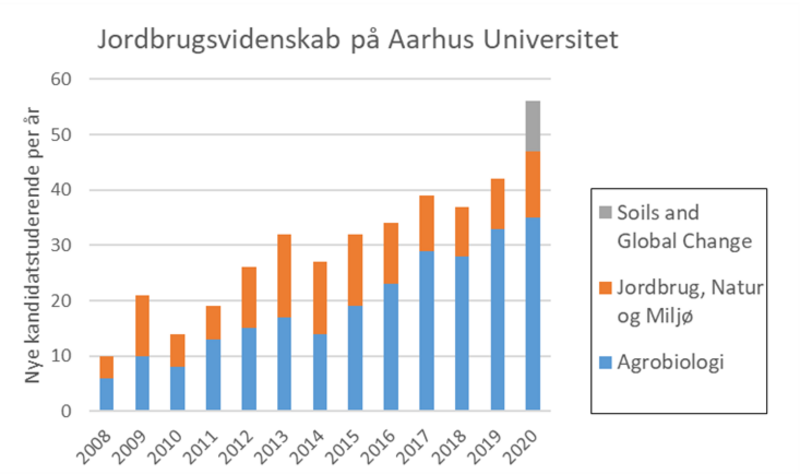
In this book chapter the many facets and critical factors in the development of the research-based consultancy and agricultural education are discussed, and the agricultural degree programmes at Aarhus University have in fact developed positively in recent years (Figure 2). However, both the needs of society and the potential for more students are enough for more, and the target is to have far more enrolled students per year. And here the new degree programmes in veterinary medicine and animal science will certainly give an extra boost.
The call for our students themselves to be able to get the basis for analysing the solutions for the transition to a green agricultural sector and for them to develop more general competence for a rewarding working life and career by working with concrete problems is important. An important task for us is therefore to formulate catalogues of these potential tasks for inspiration and to continue to include these renewed tasks in our courses, e. g. in connection with the new PhD and MSc projects which are continuously coming in, and which we can become even better at activating in our teaching, and recently also in relation to the new courses for upper secondary school students which each section in the department has contributed.
We must become better at showing concretely how our research can be applied in teaching by marketing the exciting student projects which are continuously being carried out but also by telling about the many examples of former students’ current work; thereby we can show the wide range of what a degree programme with us at AGRO can lead to in terms of an exciting working life!
A special trademark for our degree programmes might therefore in the best school tradition of Grundtvig and Kold, and entirely in the spirit of J.C. la Cour, be to educate new generations of independently thinking, and research-based thinking graduates, for the benefit of both industry and society. We cannot educate too many of these graduates!
The front page of the book on Danish Agriculture 1945-2020. The book includes a chapter on the development in education, extension service and research, for potential inspiration for the further development of our degree programmes. (Figure 3).