The start has gone well
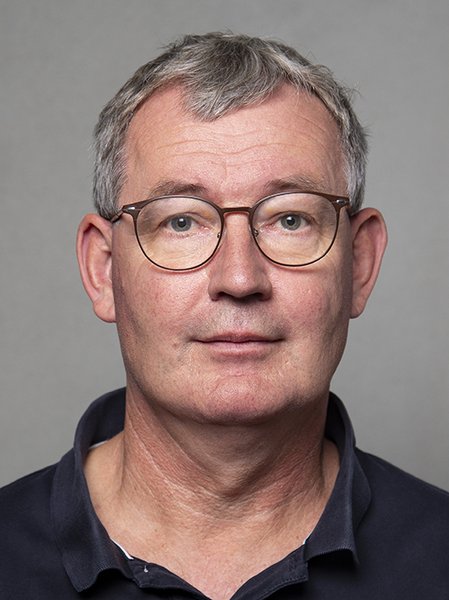
Last year, I started working at AU Flakkebjerg as manager of the field trials, and that was the beginning of – for me – an unknown and very exciting field of work. The appointment gave me all the new challenges I was looking for as I have not previously worked with research and “university environments” but with management in private companies. It was a great leap into the unknown.

A fantastic reception and support
I was received in the middle of the harvest of 2023 by a large group of nice and passionate skilled colleagues, who all did their best to give me a good reception. THANK YOU to all of you for making me part of the team, and I’m really looking forward to building a future together with you.
Sustainability, climate changes and footprints, biodiversity are all concepts that became part of my everyday life along with precision farming, drone flying and robotics. All of which is something that we in the Field Group at Flakkebjerg are trying to translate from being a vision into becoming a practical possibility in our experiments.
This task is incredibly complex and requires highly skilled colleagues who know how to establish and facilitate the many different experiments that will contribute to the common mission of creating results and new knowledge in our experiments.
The field group at Flakkebjerg consists of approx. 30 employees who all are committed to and assume a great responsibility towards all stakeholders such as researchers, public authorities and private companies. They often work with very short deadlines and at the same time with a timeliness and a meticulousness that require admirable flexibility and sometimes mean a very demanding working day.
Combined with a positive culture borne by employees with a very long seniority as well as new employees who come with an exuberant energy this provides a feeling of empathy and integrity.
That everyone cares about each another and that everybody contributes to a good inclusion is clearly felt in the interdisciplinary tasks where the secretariat, the building facilities, the laboratories and, not least, the canteen work across the board. Everyone lifts with their own competence and helps to create an inspiring atmosphere of success.
What is remembered from the past year
What is remembered is often that which has presented the greatest challenges, and in my/our case it can be said very briefly: RAIN and still more rain. From a wet harvest over a wet autumn to a late and wet spring, it is all something where timeliness took on a new reality, but the year should also be remembered as a year with a lot of activities and investments.
We have begun a much-publicised generational change, where the task will be to ensure that the knowledge, credibility and recognition that many of the older employees have built up is well passed on to new younger colleagues in order that researchers, companies and public authorities continue to receive a professional treatment. This means that we are now initiating the recruitment of new employees at an earlier stage in order to increase the likelihood that the process of a generational change will be completed successfully.
At the same time, it also requires us to adapt to today’s “Work Life” balance, where we to a greater extent accommodate the new generation’s view of a working day and enrichment in our work planning in order to remain an attractive workplace while still retaining those who already contribute.
I see generational change, retention and new appointments as the big challenge of the future. How do we ensure that AU remains attractive when we know that labour will be a limited resource in the future? Is it by profiling us with a green and climate-friendly mindset; is it access to an incredible amount of new knowledge or is it the super “cool” international diversity with good social relations, or what is it that needs to be done to ensure that we get the best new employees?
High energy prices and worn-out equipment have also meant that we have made significant investments in the past year to make our facilities more climate- and user-friendly. For example, our greenhouses and climate chambers have got new grow lights, and separate installations have been replaced and upgraded. This process continues in many other places at our locality so that we will hopefully see a reduction in energy consumption in the future.
We have also established a new borehole for field irrigation because after 50 years the old one has begun to not be able to provide the necessary water. We still believe that we will need water in the future to provide our plants with the best conditions, even though this year it rains approx. every three days. 😊
This summer, we have also invested in a neighbouring farm, which gives us access to an additional 30 hectares of land as of 1 January 2025. The farm is located close to AU Flakkebjerg’s existing land and can therefore save a lot of transport time. Likewise, the existing irrigation system can be expanded to cover some of the acquired land.
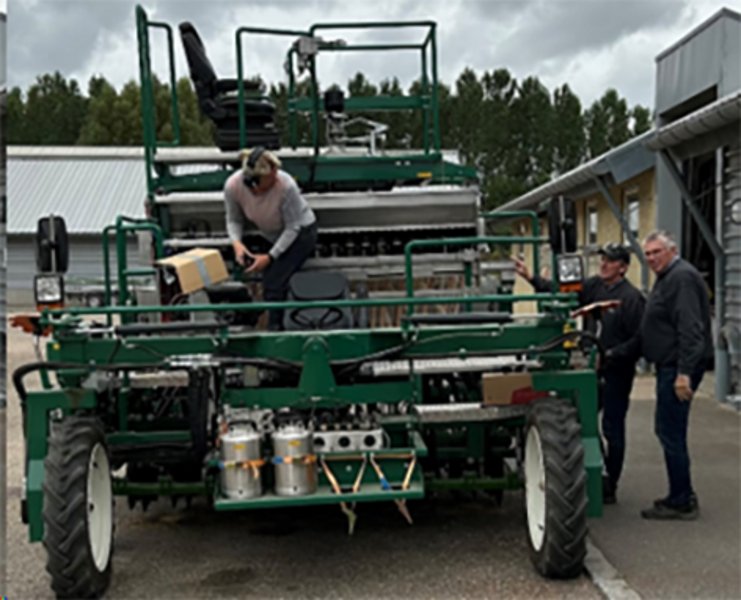
There is also a need for generational change/upgrading regarding machinery. That is why we this year have invested in a new tractor and a new experimental combine harvester among other things.
All of this is one of the things I especially remember about the past year, and it has contributed to my feeling that I have got off to a good start.
I have already said goodbye to several colleagues who have either retired or who were about to try something new, but I have also welcomed even more, and that is what it is all about. You have to be ready to adjust to tomorrow at all times.
A very steep learning curve of what actually goes on at a research centre. A very large interface with many nice and helpful people, and not least a great appetite for what the future holds.
Have a nice summer.