Degree programmes find new ways
Changes are on the way in relation to the degree programmes, including introduction of the semester structure – and a new man takes up the post in AGRO’s education committee.
The degree programmes in Science and Technology are undergoing a change. The faculty management at Science and Technology has decided to replace the structure of four quarters with a semester structure. This means that from September 2017 there will be 15 weeks of teaching followed by a four-week exam period.
One of the purposes is to be able to offer courses of long duration, which can better support learning, immersion and progression, and another is to contribute to easing the stress level among the students by having fewer exams. Periods without teaching outside the semester can be used for announced activities such as excursions and summer courses.
Transition to semester structure
The autumn semester begins on Monday in the week containing 1 September. The autumn break week is without a fixed schedule. Exams are held from 2 January until the beginning of the spring semester, and re-examinations are held in February-March.
The spring semester begins on Monday in the week containing 1 February. The three days immediately before Easter are without a fixed schedule. An extra week (the last in the semester) is scheduled for compensating, if need be, for the public holidays in the spring (that is to say Easter Monday, the Danish holiday on the fourth Friday after Easter, and Ascension Day). Exams are held in June, and re-examinations in August.
All courses must still be divisible by five ECTS credits. Courses finishing in mid-semester must not be concluded by a proper test, but continuous assessment is possible via Blackboard. The courses must be designed so that each student has a maximum of four tests in each exam term.
Courses are freshened up
Generally, the new semester structure provides an opportunity for overhauling our courses so that we can strengthen progression and avoid an overlap in the content between the courses. AGRO’s education committee agrees with ANIS and FOOD that it is necessary to make Agrobiology more visible from the first to the last semester as feedbacks from the students show that the first-year subjects are too far from what they believed they were supposed to study.
In the education committees we are right now working at adapting the schedule for the compulsory courses in order to take this into consideration, create an attractive degree programme for new students, and retain the present students.
The education committee for agricultural sciences has suggested that the three main subjects in the Bachelor’s degree programme in Agrobiology are increased from 30 to 40 ECTS. The last pieces of the mosaic of the new structure are expected to fall into place in the near future and must then be discussed with the course managers.
The new ST Recruitment forum
The faculty has as its objective to recruit talented and ambitious students and to encourage more young people to choose a scientific/technical field of study during their upper secondary school level. To achieve this objective the faculty has decided to initiate a broad range of information and recruitment activities targeted at primary school and upper secondary school pupils as well as their teachers and parents.
The ST Recruitment forum is composed of representatives from departments, centres and museums at Science and Technology as well as relevant representatives from the ST Administrative Centre. The superior purpose of the new forum is to develop and coordinate the recruitment effort of the faculty with its main focus on the Bachelor’s degree programmes. Among other things this will take place by coordinating, developing and creating a synergy between the recruitment activities at departments, centres, museums and others.
Change of guard at the education front
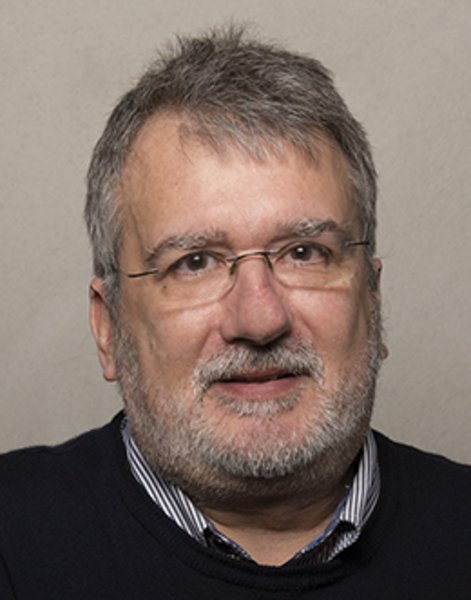
In August I was asked to take over the tasks concerning the Bachelor’s degree programme from Michael Kristensen. I would like to thank him for his great efforts in building, maintaining and coordinating this work.
This gives me many new tasks. At present the organisation of the new semester structure has my full attention. I have received much goodwill and assistance from the management team, AGRO’s education committee, ANIS, FOOD and people in the ST Studies Administration in handling these tasks. I have met my new colleagues from the other departments in ST and look forward to our future collaboration.
My idea for the future is that AGRO’s synergies in the field of research, which among other things are expressed in our proposal for a visual identity, become more visible in our degree programmes. I intend to work on strengthening the synergy between education, business and development of talents.